Commerce · Founder + Product Manager · 2020–2023
StudioXXXL
How a K-pop fan community became a ¥1.2M/year creative-commerce platform.
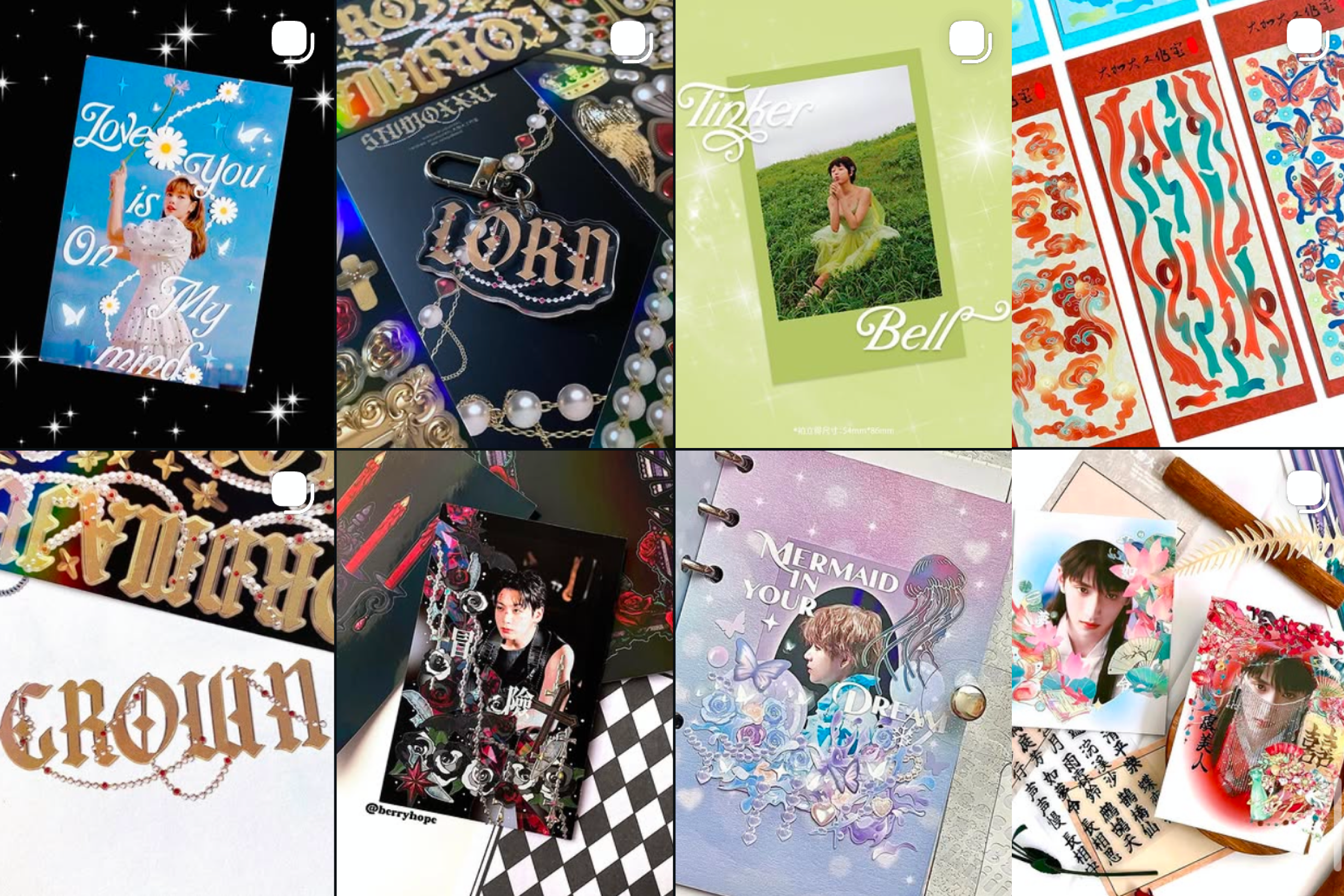
A thousand enthusiasts, decorating photocards, with no one serving them.
During the pandemic, roughly a thousand early enthusiasts in China were practicing Guca — decorating K-pop idol photocards with stickers. It was a small scene, but a telling one, and what I noticed came down to four things.
- High engagement — the community was small but intensely active.
- Painful access — quality products came from Korea through resellers.
- Price mismatch — import markups made a simple hobby expensive.
- Local advantage — China had strong specialty manufacturers but no domestic brand serving the category.
Real orders first, inventory second.
Rather than guess at what would sell, I ran a validation loop that took the risk out of every production decision — real orders came first, inventory second.
"The first batch was sold before it was produced."
— Demand validationThe loop was simple and repeatable: listen to the community, collect preorders, fund a small production run, and observe real demand before committing further. The unit economics held up cleanly — a sticker retailed at ¥6 against a production cost of roughly ¥1, leaving about ¥5 of gross profit per sticker before operating costs.
Every finished photocard pulled in the next buyer.
Around that loop I ran the operations: I hired around bottlenecks, ran repeatable marketing experiments, connected warehouse operations, and managed product assortment and campaigns together.
Designers wanted to create, not run factories.
Competition revealed something useful: many designers wanted to create but did not want to manage factories, capital, distribution, or customer support. That gap became the business.
StudioXXXL became an operational platform. Designers kept their brands and creative ownership, while StudioXXXL supplied manufacturing, financing, merchandising, distribution, and support. The business expanded from a single-brand shop into a 20+ brand platform.
Separating the moment from the job.
The business was working, but pandemic-era behavior changed. Demand for at-home creative hobbies contracted after restrictions ended, and operating a China-focused community and supply chain from the U.S. added friction.
The lasting lesson: distinguish a temporary acceleration in behavior from the deeper customer job underneath it — identity, fandom, and creative self-expression. The future test would preserve that creative job but change the medium: digital sticker packs and photo-personalization tools for the existing community, then expansion beyond K-pop fans.